Celebrating 30 Years of the Khairallah Fund at UConn
November 4, 2026
Web cookies (also called HTTP cookies, browser cookies, or simply cookies) are small pieces of data that websites store on your device (computer, phone, etc.) through your web browser. They are used to remember information about you and your interactions with the site.
Session Management:
Keeping you logged in
Remembering items in a shopping cart
Saving language or theme preferences
Personalization:
Tailoring content or ads based on your previous activity
Tracking & Analytics:
Monitoring browsing behavior for analytics or marketing purposes
Session Cookies:
Temporary; deleted when you close your browser
Used for things like keeping you logged in during a single session
Persistent Cookies:
Stored on your device until they expire or are manually deleted
Used for remembering login credentials, settings, etc.
First-Party Cookies:
Set by the website you're visiting directly
Third-Party Cookies:
Set by other domains (usually advertisers) embedded in the website
Commonly used for tracking across multiple sites
Authentication cookies are a special type of web cookie used to identify and verify a user after they log in to a website or web application.
Once you log in to a site, the server creates an authentication cookie and sends it to your browser. This cookie:
Proves to the website that you're logged in
Prevents you from having to log in again on every page you visit
Can persist across sessions if you select "Remember me"
Typically, it contains:
A unique session ID (not your actual password)
Optional metadata (e.g., expiration time, security flags)
Analytics cookies are cookies used to collect data about how visitors interact with a website. Their primary purpose is to help website owners understand and improve user experience by analyzing things like:
How users navigate the site
Which pages are most/least visited
How long users stay on each page
What device, browser, or location the user is from
Some examples of data analytics cookies may collect:
Page views and time spent on pages
Click paths (how users move from page to page)
Bounce rate (users who leave without interacting)
User demographics (location, language, device)
Referring websites (how users arrived at the site)
Here’s how you can disable cookies in common browsers:
Open Chrome and click the three vertical dots in the top-right corner.
Go to Settings > Privacy and security > Cookies and other site data.
Choose your preferred option:
Block all cookies (not recommended, can break most websites).
Block third-party cookies (can block ads and tracking cookies).
Open Firefox and click the three horizontal lines in the top-right corner.
Go to Settings > Privacy & Security.
Under the Enhanced Tracking Protection section, choose Strict to block most cookies or Custom to manually choose which cookies to block.
Open Safari and click Safari in the top-left corner of the screen.
Go to Preferences > Privacy.
Check Block all cookies to stop all cookies, or select options to block third-party cookies.
Open Edge and click the three horizontal dots in the top-right corner.
Go to Settings > Privacy, search, and services > Cookies and site permissions.
Select your cookie settings from there, including blocking all cookies or blocking third-party cookies.
For Safari on iOS: Go to Settings > Safari > Privacy & Security > Block All Cookies.
For Chrome on Android: Open the app, tap the three dots, go to Settings > Privacy and security > Cookies.
Disabling cookies can make your online experience more difficult. Some websites may not load properly, or you may be logged out frequently. Also, certain features may not work as expected.
November 4, 2026
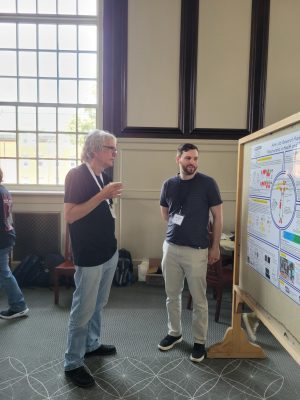
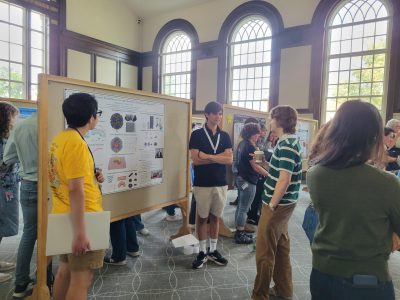
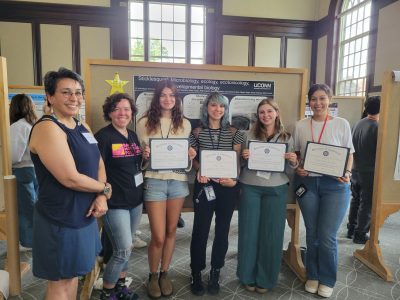
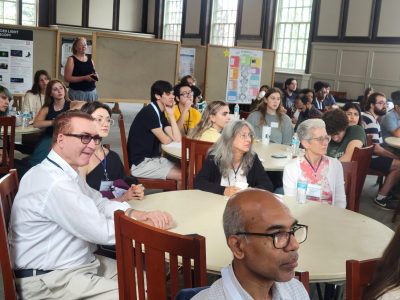
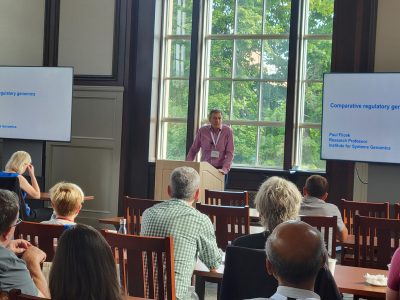
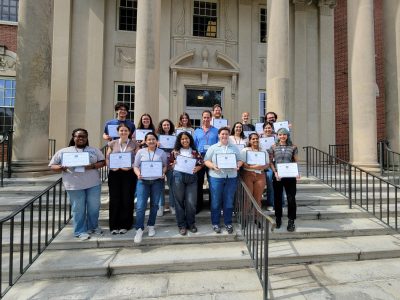
For nearly three decades, the Fund has supported student research and scholarly colloquia at UConn. Read more about it at UConn Today
October 26, 2026
September 30, 2026
The project, “Genome Infrastructure catalyzing next Generation Antarctic Data, Access, Tools, and Analytics” (GIGA DATA), is led by Alison Murray at the Desert Research Institute. $6.6 million of the award is coming to UConn, where co-PIs Rachel O’Neill and Jill Wegrzyn will contribute their genome sequencing and assembly expertise. See article in UConn Today
September 2, 2026
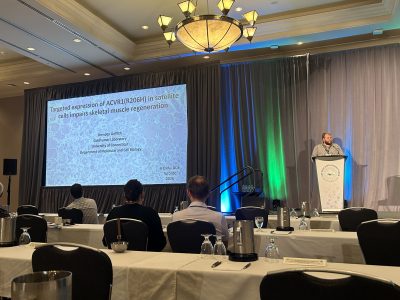
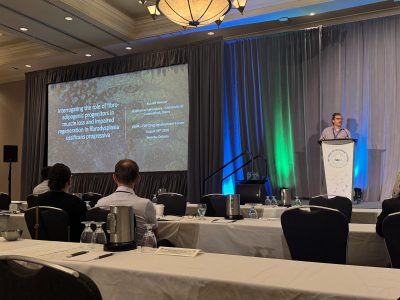
Congratulations to Russ Hanson and Brenden Griffith, Goldhamer Lab. Both were invited to give talks on their work at the International FOP (Fibrodysplasia ossificans progressiva) Association Drug Development


Forum held in Toronto, Ontario, August 27 - 30, 2026.
August 31, 2026
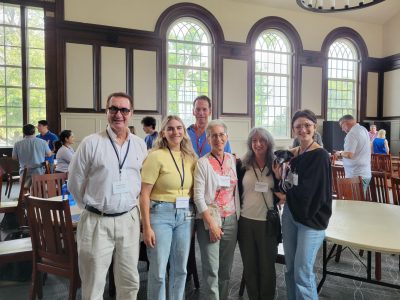
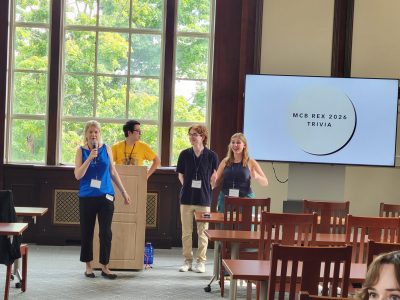
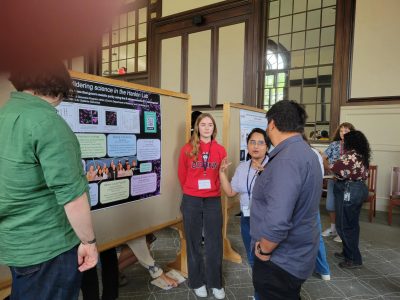
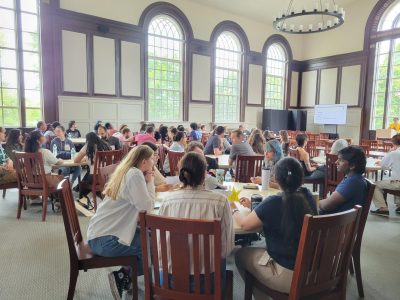
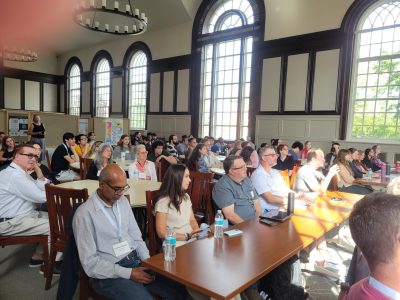
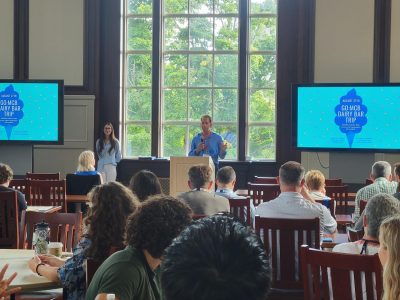
MCB held a successful Departmental Research Exchange on Thursday, 8/27. This event was created to welcome new graduate students, highlight faculty research, celebrate named scholarship donors, and congratulate our summer fellowship recipients. It was a great way to kick off the new academic year!


July 28, 2026
MCB's Heather Jamieson, Goldhamer Lab, won Best Poster Award at the International Conference: Muscle Stem Cells and Regeneration held 7/19-24. 2026 in Victoria, BC, Canada. Congratulations Heather!
May 12, 2026
The Molecular Modeling Collaborative Group (MMCG) at the University of Connecticut brings together faculty and researchers who use computational approaches to understand and predict molecular behavior across chemistry, biology, and materials science. The group has launched its website to share more details about MMCG's mission, available resources and more. Visit the MMCG website to learn more!
May 6, 2026
Nora Lippai recently presented her research at the Frontiers in Undergraduate Research exhibition. It was the latest step in work she has found compelling since the start of her academic career at UConn: tackling unanswered questions in biological research and exploring the molecular and cellular underpinnings of health and disease. Full article in UConn Today
April 27, 2026
The 2026 Summer Undergraduate Research Fund (SURF) Awards have been announced. Out of the 39 total awardees, MCB is pleased to share that twelve of the students are Molecular and Cell Biology Majors. MCB recipients are:
Caroline Burkhardt ’28 (Anthropology & Molecular and Cell Biology, CLAS), Project Title: Chronic Illness Experiences on the Hopi Reservation, Faculty Mentor: Dr. Sarah Willen, Anthropology
Rakshan Chadha ’27 (Molecular and Cell Biology & Statistics, CLAS) Project Title: Optimizing Tumor Delivery of Barium Titanate Nanoparticles for Radiation Therapy in a Murine Pancreatic Cancer Model, Faculty Mentor: Dr. Henry Smilowitz, Cell Biology
Brady Cheneski ’28 (Physiology and Neurobiology & Molecular and Cell Biology, CLAS) Project Title: Exploring the Role of Hypothalamic Inputs to the Dentate Gyrus in Aversive Context Discrimination and Generalization, Faculty Mentor: Dr. Sebnem Tuncdemir, Neuroscience
Anna Coulter ’27 (Molecular and Cell Biology, CLAS) Project Title: Synthesis of Photoswitchable NF 110 Analogs: Investigating P2X3 Receptors in Oral Pain, Faculty Mentor: Dr. Michael Kienzler, Chemistry
Elizabeth Evans ’28 (Molecular and Cell Biology, CLAS) Project Title: Altered Proliferation Dynamics of MyoD- and Myf5-Deficient Satellite Cells During Skeletal Muscle Regeneration, Faculty Mentor: Dr. David Goldhamer, Molecular and Cell Biology
Katherine Foley ’27 (Molecular and Cell Biology, CLAS) Project Title: Characterization of Scx+ Cell Proliferation in Fibrodysplasia Ossificans Progressiva, Faculty Mentor: Dr. David Goldhamer, Molecular and Cell Biology
Shailaja Gillett ’27 (Molecular and Cell Biology, CLAS) Project Title: Parafibromin/β-Catenin Interaction as a Potential Mechanism for CDC73 Tumor Suppressive Functions, Faculty Mentor: Dr. Jessica Costa, Regenerative Medicine and Skeletal Development
Maya Kelly ’27 (Molecular and Cell Biology, CLAS) Project Title: A Novel Role for RNA Modifications in Substance Use Disorder, Faculty Mentor: Dr. Gregory Sartor, Pharmaceutical Sciences
Wesley Ong ’27 (Molecular and Cell Biology, CLAS) Project Title: Investigating the Molecular Building Blocks of Hypocretin/Orexin Synapses Faculty Mentor: Dr. Alexander Jackson, Physiology and Neurobiology
Tuyet Nhung Phan ’28 (Molecular and Cell Biology, CLAS) Project Title: Development of Doxycycline-Inducible CRISPR-Interference Screening System to Identify Genes, Involved in Tet2-Deficient Clonal Hematopoiesis, Faculty Mentor: Dr. Hideyuki Oguro, Cell Biology
Jay Podziewski ’27 (Molecular and Cell Biology, CLAS), Project Title: The Electroporation of Atlantic Horseshoe Crab (Limulus polyphemus) Amebocytes as a First Step Towards Sustainable LAL Production, Faculty Mentor: Dr. Kate Castellano, Institute for Systems Genomics
Gabrielle Grace Setiadi ’27 (Molecular and Cell Biology & IMJR: Bioinformatics, CLAS), Project Title: The Role of BRD4 in Alveolar Macrophage Activation, Faculty Mentor: Dr. L. Cody Smith, Pharmaceutical Sciences
Join us in congratulating the newly elected board members!