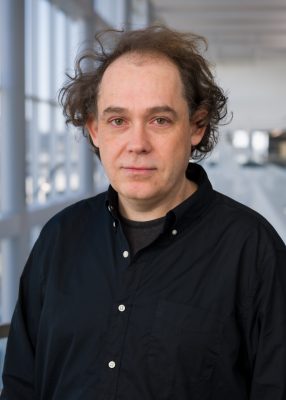
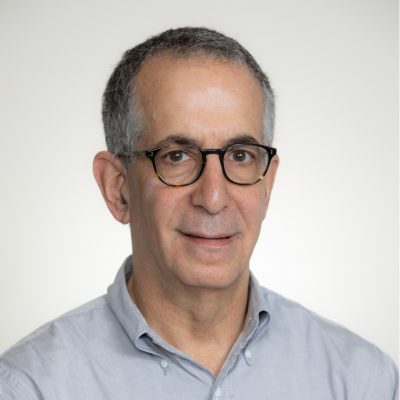
 James R. Cole, Ph.D., Professor of Structural Biology and Biophysics, retired in June 2023 after a 23-year career here in the MCB Department. Dr. Cole received his bachelor’s degree from Brown University before obtaining a PhD in Chemistry at the University of California at Berkley and carried out his postdoctoral work in Chemistry at Stanford University. He then headed to the pharmaceutical sector where he spent ten years at Merck Research Labs, West Point, PA. in the Biochemistry and Antiviral Research Departments before joining our faculty in 2001.
Dr. Cole’s research interests included the understanding of innate immunity pathways which defend against viral infections. The main focus of his laboratory was using biophysical techniques to determine how various macromolecular interactions drive regulation of Protein Kinase R (PKR). PKR is activated by dsRNA to initiate antiviral responses but also regulates mRNA translation, apoptosis, and proliferation. Funded primarily by the NIH, Jim published over 110 reviewed papers, articles, and book chapters.
Dr. Cole mentored twelve PhD student, four MS students and dozens of undergraduates. A fearless educator, Dr. Cole was an encouraging mentor, advisor and co-advisor championing efforts of students and colleagues at UConn but also across various scientific fields. One of his PhD students, Dr. Cassie Zerbie commented “I didn’t quite realize it at the time, but Jim had a ton of confidence in us … He also let me dabble with many different things during my PhD, and I gained knowledge and experience through these experiences that have been so valuable for a career in biotech”. Another of his PhD students, Dr. Bushra Husain said “He is a fantastic scientist and has been an amazing mentor … what makes him truly unique though, is his genuine desire to foster scientific rigor in his students, and his deep commitment to their wellbeing and future success”.
With his experience in the biotech sector, Dr. Cole brought a new viewpoint to the department. He started a company during his UConn tenure, with the goal of identifying small molecule activators of PKR with activity in cell-based assays for replication of pathogenic viruses. His efforts yielded venture capital funding to discover compounds and probe their therapeutic profiles. Jim’s forte is a technique called analytical ultracentrifugation (AUC), a solution-based experimental method that provides information about the size and shape of biomolecules as well as a quantitative analysis of macromolecular interactions. World renown for his expertise and contributions to the technology, Jim founded the National Analytical Ultracentrifugation (AUC) Facility at Storrs, running nationally attended workshops for over eight years, and afterwards, at other venues including international locations such as Singapore. Dr. Cole was also the co-PI of an NSF grant to bring a new technology to UConn, small angle scattering (SAXS) which provides solution structures of biological assemblies.
Dr. Cole’s distinguished service record includes being a member of numerous NSF and NIH study sections, including the Emergency Awards: Antiviral Drug Discovery (AViDD) Centers for Pathogens of Pandemic Concern in 2020. He was an editorial board member of the Biophysical Journal and now for Biomolecules. He also edited a Methods in Enzymology volume which has become the definitive textbook for those interested in AUC. A staunch supporter of women in science and a longstanding member of the society, Dr. Cole participated in the Biophysical Society Committee for Professional Opportunities for Women for six years. At UConn, he sat on the President’s committee on technology commercialization, served as the Director of UConn’s Partnership for Excellence in Structural Biology and organized several North Eastern Structure Symposiums affiliated with our partnership. He was on the Graduate Faculty Council and General Education Committee as well as the Dean’s advisory council for promotion and tenure review. In the MCB department, he was the Structural Biology, Biophysics and Biochemistry Program Chair for six years, chaired three successful faculty searches, was involved in, and then headed, the Courses and Curriculum committee and led the department self-study in 2015. Dr. Cole was elected to the Connecticut Academy of Arts and Sciences.
One of Jim’s favorite undertakings happened every fall when he attended the Gibbs Conference on Biothermodynamics at the Touch of Nature Outdoor Education Center in Carbondale, IL. A who’s who of those interested in biological thermodynamics, this conference couples two of Dr. Cole’s favorite things, biophysics and the outdoors. An avid hiker and cyclist, Dr. Cole’s adventurous spirit has taken him and his family across the globe from the Galapagos Islands to Portugal and even a little closer to home traversing the Nova Scotia coastline. Not one to slow down, Jim has become a member of the Board of Trustees for the Joshua Trust, while maintaining active scientific collaborations at UConn and elsewhere.
MCB Department Head Carolyn Teschke worked closely with Dr. Cole and says, “Dr. Cole’s research was in the fascinating area of a cell’s innate immunity works to overcome viral infections, which he approached using techniques in biophysics and biochemistry. He trained his graduate students to approach their science with rigor, and supported their careers when they left his lab. He advocated for Biophysics through his service on funding panels and editorial boards. Dr. Cole held us all to the highest standards as educators and researchers.”
Dr. Cole has been appointed by the UConn Board of Trustees as Professor Emeritus, Molecular and Cell Biology.
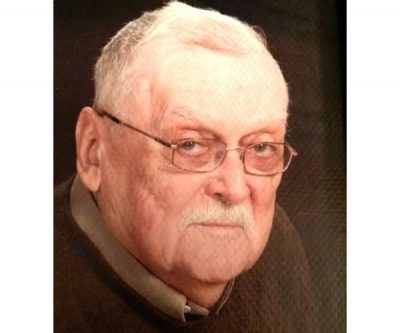 He received his doctorate in biochemistry at Rutgers University in 1957 followed by postdoctoral work at the Enzyme Institute at the University of Wisconsin, Madison. In 1961 he moved to the University of Pennsylvania, Pittsburg, as an Assistant Professor, doing research on diabetes. In 1964 he accepted a position at UConn in the Biochemistry and Biophysics Section of the Biological Sciences Group, the common ancestor of the MCB, PNB, and EEB departments. His research dealt with the hormonal regulation of metabolism in mitochondria, biosynthesis and control of mitochondrial membrane synthesis, and the reconstitution of mitochondrial anion transporters. He also taught biochemistry and other biology courses. He retired as Professor of Molecular and Cell Biology in 1997.